Unlocking Beijing's Z-Park
A South African Guide to Partnership in Beijing's Innovation Hub
Executive Summary
This report evaluates the strategic potential for forging innovation bridges between South African ecosystem actors (incubators, accelerators, startups) and Zhongguancun Science Park (Z-Park), China's preeminent national innovation hub. It explores the opportunities and challenges inherent in establishing mutually beneficial partnerships aimed at technology exchange, market access, and joint innovation.
Situated in Beijing, Z-Park is a critical engine for China's innovation-driven development strategy and a focal point for international science and technology (S&T) cooperation. Its extensive ecosystem, encompassing specialized sub-parks, numerous high-tech enterprises, research institutions, and a powerful administrative body (ZGCAC/BMSTC), presents a dynamic environment. The broader context of strengthening China-South Africa relations, particularly within the BRICS framework and supported by existing bilateral S&T agreements (including a 2017 Science Park Cooperation accord specifically citing Z-Park), creates a favourable environment for deepening innovation collaboration at the ecosystem level.
Partnering with Z-Park offers South African stakeholders significant potential value. This includes access to cutting-edge technologies and R&D infrastructure (especially in Z-Park priority areas like AI, biotechnology, ICT, cleantech, and advanced manufacturing), pathways for China market entry and scale-up facilitated by dedicated soft-landing programs and incubators (e.g., ZGC International, Innoway), a diverse funding landscape encompassing government grants and venture capital, opportunities for talent attraction and exchange supported by specific visa and incentive policies, and access to intellectual property (IP) support services within a strengthening Chinese legal framework.
Realizing this potential necessitates a strategic and informed approach. Effective engagement hinges on aligning South African strengths with Z-Park's specific technological priorities (e.g., AI, life sciences, ICT, cleantech), navigating a complex administrative and funding landscape often requiring local registration and adherence to specific criteria (though some policies offer facilitated pathways for foreign talent), proactively managing IP considerations despite improvements in protection frameworks, and overcoming intense market competition. Building strong relationships with local intermediaries (like ZGC International, CITTC) and partners is crucial for navigating the ecosystem effectively. While BRICS provides a high-level strategic channel, specific preferential treatment for BRICS entities within Z-Park's general programs is not explicitly documented, suggesting alignment and merit remain key criteria.
Formal engagement can occur through various channels, including applying to dedicated international incubators (e.g., ZGC International, Innoway), utilizing technology transfer platforms (e.g., CITTC), participating in flagship events (e.g., the ZGC Forum), leveraging BRICS-specific initiatives where relevant, and establishing direct institutional partnerships (e.g., incubator-to-incubator MoUs emphasizing reciprocity).
Key recommendations for South African stakeholders include conducting thorough due diligence to identify aligned partners within Z-Park, developing clear value propositions emphasizing complementarity, leveraging existing bilateral and BRICS frameworks, proactively managing IP, and preparing meticulously for procedural requirements (visas, registration, funding applications). For South African government and support agencies, recommendations focus on disseminating targeted information, facilitating strategic engagement (delegations, event participation), working to operationalize existing cooperation agreements to support concrete Z-Park initiatives, providing navigational support for legal and procedural hurdles, and utilizing BRICS S&T channels to advocate for enhanced collaboration mechanisms.
In conclusion, Z-Park represents a significant, albeit complex, opportunity for the South African innovation ecosystem to accelerate technological development, access a major global market, and foster international collaboration. While substantial benefits are attainable, success requires a well-informed, strategic, and persistent approach focused on mutual value creation and effectively navigating the specific dynamics of China's leading innovation hub.
I. Introduction: Zhongguancun Science Park and the China-South Africa Innovation Opportunity
A. Zhongguancun Science Park (Z-Park): Profile of China's Leading Innovation Hub
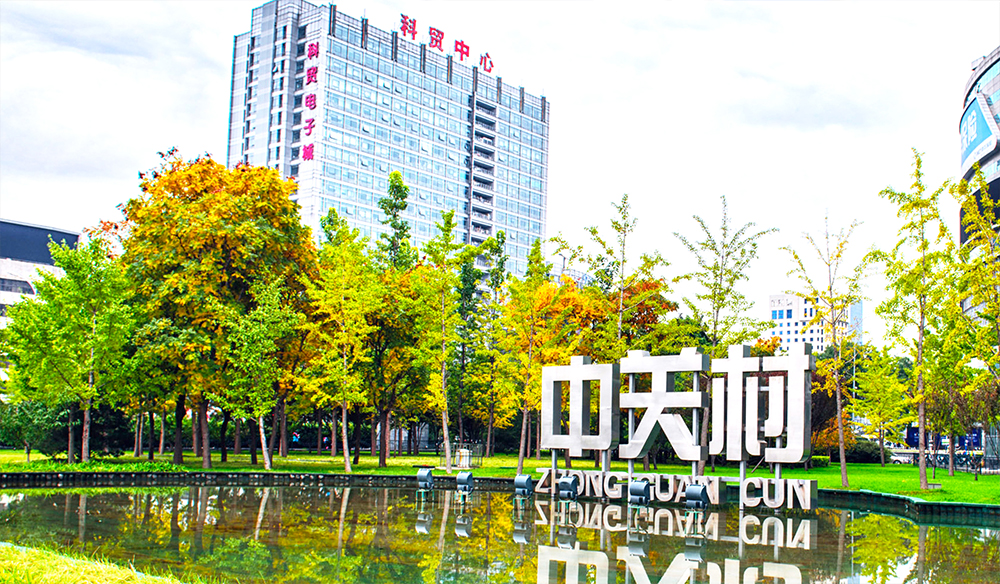
Zhongguancun Science Park (Z-Park), situated in Beijing, stands as China's preeminent national innovation hub, frequently labelled "China's Silicon Valley".¹ It serves as a nucleus for the nation's technological advancement, hosting a vast concentration of high-technology enterprises spanning diverse sectors.³ The park's significance is underscored by its formal designation as a National Independent Innovation Demonstration Zone (国家自主创新示范区)¹, positioning it not merely as a geographical cluster but as a strategic instrument for national innovation policy.
The governance of Z-Park is characterized by a unique and powerful structure. The Zhongguancun Science Park Administrative Committee (ZGCAC), the primary management body, operates in close coordination, effectively as a single entity, with the Beijing Municipal Science & Technology Commission (BMSTC).⁶ This merged structure, where both bureau-level organizations operate from the same location and implement unified directives, also incorporates the functions of the Beijing Municipal Administration of Foreign Experts Affairs.⁶ This consolidation centralizes science and technology policy-making and park administration within Beijing, ensuring that Z-Park's operations are tightly aligned with municipal and national strategic objectives. The ZGCAC holds specific responsibilities including formulating park development plans, attracting and concentrating innovation resources, nurturing technology enterprises, advancing high-tech industry development, innovating management systems, and strengthening service functions within the park.⁸ Official communication channels include government websites like zgcgw.beijing.gov.cn¹ and kw.beijing.gov.cn.⁴ For potential international partners, including those from South Africa, this unified governance structure offers a clear primary point of contact but also highlights the necessity for proposed collaborations to resonate with the established strategic priorities defined by this powerful body.
Z-Park's physical and operational scope is extensive, encompassing multiple specialized sub-parks tailored to specific industries. Notable examples include the Zhongguancun Life Science Park¹⁰ focusing on biotechnology, pharmaceuticals, and medical devices, and the Zhongguancun Yanqing Garden¹¹, which centers on new energy and environmental protection. The Zhongguancun Haidian Park serves as a core area with diverse tech focus and houses key administrative functions.⁸ This structure indicates a large, diverse, and increasingly specialized ecosystem designed to foster innovation across a wide spectrum of advanced technologies. Z-Park's international reputation as a leading global technology center is well-established.³ Its role extends beyond providing infrastructure; it functions as a critical platform for implementing national and municipal science and technology policies, serving as a testbed and showcase for China's innovation ambitions.⁵ Consequently, Z-Park offers access to a policy-rich environment where pilot programs and preferential treatments are often introduced and evaluated, potentially providing unique opportunities for participating entities.
B. The Broader Context: China's Innovation Strategy and International S&T Cooperation
China's national development strategy places paramount importance on innovation-driven growth⁶, with ambitions to achieve global leadership in critical technological fields.¹⁴ This involves a concerted effort to develop "core technologies"¹⁵ and overcome persistent challenges, such as talent shortages in key areas.¹⁴ The Ministry of Science and Technology (MOST) is the central government body responsible for formulating national science and technology guidelines, policies, and plans, including those related to attracting foreign talent.¹³ MOST also plays a crucial role in coordinating China's extensive international science and technology cooperation efforts¹⁷ via its official website www.most.gov.cn.¹⁷
China actively pursues and promotes international S&T collaboration, having established formal cooperative relationships with 161 countries and regions as of early 2025.¹⁷ Official policy emphasizes the principles of openness, fairness, justice, and non-discrimination in international S&T cooperation, framed by the concept that "science has no borders, benefits all mankind".¹⁹ This includes advocating for open science principles, facilitating the global flow of talent and resources, strengthening intellectual property protection, and opposing the politicization or weaponization of S&T cooperation.¹⁹ MOST manages various inter-governmental S&T cooperation programs, often announced biannually¹⁸, and supports initiatives aligned with broader foreign policy goals, such as the "Belt and Road" Science, Technology and Innovation Cooperation Action Plan²⁰ and South-South cooperation initiatives, exemplified by workshops on green urban planning for African nations.²¹
Within this national framework, Beijing holds a pivotal position. The BMSTC/ZGCAC leads the charge in constructing Beijing as an "International Center for Science & Technology Innovation"⁶, translating national strategies into local action plans and initiatives (via kw.beijing.gov.cn).⁶ Beijing actively implements policies designed to attract foreign talent, investment, and R&D activities.²² While China's official stance strongly promotes international collaboration and mutual benefit¹⁷, this openness operates within the context of national strategic priorities and evolving national security considerations.¹⁹ Collaboration is particularly encouraged in areas that align with China's development goals, such as attracting high-level talent²² or advancing specific technological fields.⁴ However, partnerships involving sensitive technologies or perceived risks of detrimental technology outflow may face greater scrutiny or specific controls.²⁵ South African stakeholders should anticipate a generally welcoming environment, especially in designated priority sectors, but must be prepared for potential regulatory oversight depending on the nature of the collaboration.
C. BRICS and South-South Cooperation Frameworks
China views the BRICS mechanism (Brazil, Russia, India, China, South Africa, and recent additions including Saudi Arabia, Egypt, UAE, Iran, Ethiopia²⁷) as a crucial platform for emerging markets and developing countries to strengthen solidarity, enhance cooperation, and safeguard shared interests.²⁷ The expansion of BRICS in 2024 marks the beginning of a "Greater BRICS cooperation" era.²⁸ China has been a consistent proponent of expanding the group's reach, notably through the "BRICS+" cooperation model introduced in 2017, which aims to engage a wider range of emerging markets and developing countries.²⁸
Within the BRICS framework, science, technology, and innovation are key pillars of cooperation. Significant initiatives include:
- BRICS Partnership on New Industrial Revolution (PartNIR): Formally endorsed at the Johannesburg Summit, this initiative aims to foster collaboration in areas related to the fourth industrial revolution. An Innovation Base was established in Xiamen, Fujian Province³⁰, focusing on policy coordination, talent development, and project collaboration.³⁰ While the main base is in Xiamen (
www.bricspic.org)³¹, related activities and events are also held in Beijing.³¹ - Dedicated BRICS Centers: China has proposed or established several centers to deepen cooperation, including the China-BRICS AI Development and Cooperation Center, a potential BRICS Deep Sea Resource International Research Center, a BRICS Special Economic Zone China Cooperation Center, a BRICS Industrial Capacity China Center, and a BRICS Digital Industry Ecosystem Cooperation Network.³²
- BRICS Digital Education Cooperation: This mechanism, proposed by China, has been implemented to foster collaboration in digital education.³²
China explicitly frames BRICS cooperation within the broader context of the "Global South"²⁸ and utilizes various platforms, including MOST-sponsored workshops²¹, to promote South-South collaboration. Z-Park, as Beijing's primary innovation engine, is intrinsically linked to these national priorities. Although the main PartNIR base is physically located in Xiamen, Beijing's role as the capital and a major innovation hub means it hosts significant BRICS-related events.³¹ The mention of a "China-BRICS National New Era Science and Technology Innovation Incubation Park"³¹ suggests the potential existence of dedicated infrastructure in or near Beijing, possibly connected to Z-Park, aimed at facilitating BRICS innovation activities. Given Z-Park's strengths, particularly in AI, it is a logical locus for implementing initiatives like the China-BRICS AI Center.³² The BRICS framework is clearly utilized by China as a priority channel to advance its S&T objectives and deepen strategic partnerships with key emerging economies.²⁸ For South African stakeholders, engaging through BRICS mechanisms could offer a potentially advantageous pathway, aligning with mutually agreed strategic goals and possibly unlocking access to specific resources or programs, although explicit preferential treatment within general Z-Park programs needs further verification.
D. Existing China-South Africa S&T Links
A foundation for deeper innovation collaboration between China and South Africa already exists, built upon formal agreements and ongoing programs. A bilateral Intergovernmental Science and Technology Cooperation Agreement provides the overarching framework.³³ Under this agreement, MOST and South Africa's Department of Science and Innovation (DSI, formerly DST) have periodically launched joint research programs. These programs typically require coordinated applications from researchers in both countries and prioritize projects offering mutual benefits, often with potential for technological output or industrial application.³³
Specific initiatives further strengthen these ties:
- SA-China Science Park Cooperation: Launched in April 2017 during the China-South Africa High-Level People-to-People Exchange Mechanism, this agreement explicitly aims for South Africa to draw upon Chinese expertise in developing high-technology facilities and science parks.³ Z-Park was cited as a leading example of China's success in this area.³ Key focus sectors identified for this cooperation include ICTs, advanced manufacturing, the bio-economy, and renewable energy.³ The launch involved workshops and exchanges between stakeholders from both countries.³
- Talent Exchange Programs: Initiatives like the China-South Africa Young Scientist Exchange Programme (YSEP) facilitate mobility and collaboration between researchers, particularly early-career scientists.³⁴ Additionally, the broader "China-Africa Science and Technology Partnership Program 2.0" includes South Africa, aiming to enhance S&T collaboration across the continent.³⁵
This existing architecture of intergovernmental agreements, joint research funding calls, dedicated science park cooperation frameworks referencing Z-Park, and established talent exchange programs demonstrates significant political will and provides established channels for S&T interaction. This foundation can be effectively leveraged to build new, more focused partnerships at the ecosystem level, specifically targeting incubator, accelerator, and startup engagement with Z-Park, rather than needing to establish cooperative mechanisms entirely from scratch. The 2017 Science Park Cooperation agreement, in particular, directly paves the way for the type of strategic engagement explored in this report.
II. Strategic Value Proposition for South African Ecosystem Actors
Partnering with Zhongguancun Science Park offers a multifaceted value proposition for South African incubators, accelerators, and startups, spanning access to technology, market entry pathways, funding opportunities, talent pipelines, and IP support systems.
A. Accessing Technology, R&D, and Expertise
Z-Park represents one of the world's most concentrated hubs for advanced research and development. It hosts thousands of high-tech enterprises and numerous research institutions, creating a vibrant ecosystem at the forefront of global innovation.³ Key technological strengths lie in areas critical to future economic competitiveness, including artificial intelligence (AI), big data analytics, quantum computing¹⁴, biotechnology and life sciences¹⁰, and advanced manufacturing.³
Collaboration with Z-Park entities can provide South African innovators with invaluable access to these cutting-edge technologies, opportunities for joint R&D projects, and exposure to specialized expertise. Platforms within the Z-Park ecosystem, such as those managed by ZGC International Holdings (www.zgc-intl.com)³⁷, explicitly aim to foster the two-way exchange and transformation of scientific and technological achievements.³⁷ Furthermore, dedicated international technology transfer platforms like the China International Technology Transfer Center (CITTC) operate within this environment, offering structured channels for accessing and disseminating technology.³⁸
For South African startups, particularly those operating in technology-intensive sectors, Z-Park offers a unique opportunity to accelerate their technological development trajectory. Engaging with the park allows them to tap into global technology trends, identify potential R&D collaborators, and leverage advanced infrastructure and knowledge networks. The sheer concentration of talent³⁹, capital⁵, leading firms³, and research bodies³⁶, combined with significant, targeted government policy support⁴, fosters an environment of high-velocity innovation. Technological advancements, especially in nationally prioritized fields like AI¹², occur at a rapid pace. By embedding themselves within this dynamic flow, South African partners can gain significant advantages, accessing facilities⁵, observing emerging trends, and potentially co-developing solutions more rapidly than might be possible within their domestic ecosystem alone.
B. China Market Entry and Scale-Up Pathways
A primary attraction for international companies engaging with China is the potential access to its vast and rapidly growing domestic market. Z-Park is strategically positioned as a gateway for foreign innovators seeking to enter this market. Numerous incubators and specialized platforms within Z-Park are explicitly designed to facilitate a "soft landing" for international partners.³⁷
These platforms offer a suite of services tailored to the needs of foreign entrants. Incubators such as the Beijing Zhongguancun International Incubator provide support under models combining incubation services with venture capital access ("Incubation + Venture Capital").⁴² Zhongguancun Innoway (also known as Zhongguancun Entrepreneurship Street, www.z-innoway.com)⁵⁶ specifically assists international teams interested in the Chinese market, offering services like global incubation and entrepreneurial guidance.⁴³ ZGC International Holdings (www.zgc-intl.com)³⁷ operates a network of overseas innovation centers designed to bridge foreign companies into the Z-Park ecosystem and the broader Chinese market, offering cross-border incubation, acceleration support, market expansion assistance, and talent acquisition services.³⁷
While Z-Park provides these structured programs and dedicated platforms³⁷ to ease the market entry process, potential partners must recognize the inherent complexities of the Chinese market. Intense competition, a distinct regulatory landscape, unique business practices, and cultural nuances present significant hurdles. The support services offered by Z-Park entities aim to mitigate these challenges by providing crucial logistical support, network access, and potentially initial funding. However, achieving sustainable success requires substantial adaptation, strategic planning, and effort that extends beyond utilizing these initial support structures. The platforms lower the barrier to entry but do not guarantee market success.
C. Navigating the Funding and Investment Landscape
The Z-Park ecosystem boasts a diverse and layered funding landscape accessible to startups. This includes various government-backed support mechanisms, such as dedicated funds supporting small enterprise innovation, patent promotion, and specific industry development.¹¹ Programs like the Angel Partner Fund aim to stimulate early-stage investment.⁴¹ Specific policies provide direct financial support to startups, including seed funding for young entrepreneurs (under 30, or 35 for foreign talent) through the "U30雏鹰人才企业" initiative, and grants for slightly older entrepreneurs (under 35) whose companies have already secured some investment ("获得投资类雏鹰人才企业").⁵
Beyond government grants, Z-Park is a major center for venture capital activity, although specific VC firms active in the park are not detailed in the provided sources. Incubators often play a crucial role in connecting startups with investors or may even invest directly through "Investment + Incubation" models.⁴² ZGC International Holdings also manages its own innovation funds aimed at supporting promising companies.³⁷
While this multi-layered funding environment presents significant opportunities, accessing these resources requires careful navigation. Government funding programs typically involve specific application procedures and eligibility criteria, often requiring local registration within Z-Park and alignment with designated talent categories or technological priorities.⁵ Foreign entities must understand and meet these requirements, potentially necessitating local partnerships or specialized assistance to navigate the application processes.⁸ Competition for funding, both public and private, is intense due to the large number of domestic players. Although foreign talent and enterprises are explicitly eligible for various incentive programs⁵, specific, preferential funding channels reserved exclusively for BRICS entities within Z-Park's general funding mechanisms are not clearly documented in the available materials.⁴ While the BRICS PartNIR Innovation Base³¹ might offer dedicated funding, its primary operations are likely centered in Xiamen. Therefore, while funding exists, securing it demands strategic effort, meticulous preparation, and effective navigation of the local ecosystem's requirements.
D. Talent Development and Exchange Opportunities
Recognizing the critical role of human capital in innovation, Beijing and Z-Park have implemented numerous policies aimed at attracting and retaining high-level overseas talent.²² These initiatives create opportunities for South African professionals and researchers. Incentives include streamlined visa and residency processes, such as facilitated work permits for entrepreneurs channeled through incubators⁴⁴, special long-term business visas (M Visas)⁴⁵, and potentially 10-year talent visas (R Visas) for qualifying foreign PhD graduates.⁴⁴ High-level foreign talents meeting specific criteria may even be eligible for direct application for permanent residence in China, with significantly reduced processing times.²³
Direct financial incentives are also available. The "Zhongguancun High-end Leading Talent Aggregation Project" offers substantial grants (e.g., RMB 1 million) to qualifying individuals.⁵ Eligibility for these top-tier programs often requires specific qualifications, such as an overseas doctorate, senior positions (associate professor or equivalent) in renowned institutions, senior technical or management roles in international companies, or ownership of independent intellectual property.⁴⁰ Policies also aim to facilitate internships and entrepreneurial activities for foreign students.²³
Furthermore, established bilateral programs like the China-South Africa Young Scientist Exchange Programme (YSEP) provide structured channels for researcher mobility.³⁴ Platforms like ZGC International Holdings actively seek to foster international talent exchange.³⁷ The proximity of Z-Park to elite academic institutions like Peking University and Tsinghua University³⁶ ensures access to a large pool of highly skilled graduates and researchers, creating opportunities for recruitment and collaboration.
However, the emphasis of these talent policies appears heavily skewed towards attracting established, high-level international experts (PhDs, senior researchers, experienced managers)⁴⁰ and entrepreneurial talent committed to launching ventures within Z-Park.⁵ Pathways for mid-career professionals or those not fitting specific high-demand categories might be less defined or incentivized. The policies are largely designed to integrate foreign talent into the local innovation ecosystem, often linking benefits to local employment or entrepreneurship within Z-Park. South African individuals and organizations aiming to leverage these talent programs should focus on identifying candidates who meet the high-level criteria or are prepared to establish a formal affiliation or venture within Z-Park to maximize the available support.
E. Intellectual Property (IP) Protection and Support Services
Effective intellectual property protection is a critical concern for technology-based companies engaging internationally. China has made significant strides in strengthening its IP legal framework to align with international standards and foster an environment conducive to innovation and foreign investment. The Foreign Investment Law explicitly guarantees the protection of IP rights for foreign investors and foreign-invested enterprises.⁴⁶ China is a signatory to major international IP treaties⁴⁷, and its domestic legislation includes regulations governing technology import and export⁴⁸ and customs-based IP protection measures.⁴⁸
Official statements emphasize equal legal protection for the IP rights of both domestic and foreign entities⁴⁷, and government agencies report increasing enforcement actions against infringement, including trademark violations and patent counterfeiting.⁴⁹ The level of IP protection is recognized as a factor influencing foreign direct investment decisions.⁴⁶
To support IP management and enforcement, specialized services are available within the Z-Park ecosystem. The China International Technology Transfer Center (CITTC), for instance, offers consultancy services on IP protection as part of its technology transfer support package.³⁸ Beijing also hosts dedicated facilities like the Beijing (Zhongguancun) International Intellectual Property Service Hall, designed to enhance the quality and capacity of IP services available to enterprises.⁵⁰ Organizations like the Zhongguancun Intellectual Property Strategy Research Institute also contribute to the ecosystem.⁵¹
Despite these advancements in the legal framework and support infrastructure, historical concerns among foreign companies regarding the practical effectiveness of IP enforcement and risks related to technology transfer persist, often highlighted in international trade discussions.²⁶ While the legal architecture is robust and improving⁴⁶, and dedicated service platforms exist³⁸, South African entities entering into collaborations, particularly those involving sensitive technologies, should adopt a proactive and cautious approach. This includes conducting thorough due diligence on potential partners, developing a comprehensive IP strategy tailored to the Chinese legal environment (potentially utilizing local expertise³⁸), clearly defining IP ownership and usage rights in contracts, and understanding the practical mechanisms for enforcement within the Chinese system.
III. Zhongguancun's Innovation Priorities and Ecosystem
Understanding Z-Park's specific technological focus areas and the structure of its ecosystem is crucial for South African stakeholders seeking alignment and effective engagement.
A. Key Technological and Industrial Focus Areas
Z-Park's innovation activities are strategically directed towards specific high-priority technological and industrial domains. Analysis of official government plans, park announcements, resident company profiles, and major event themes reveals a clear focus on sectors deemed critical for China's future economic and technological leadership. These include:
- Artificial Intelligence (AI): A major priority, evidenced by dedicated municipal action plans like the "Beijing Municipal Action Plan to Promote ‘AI+’ (2024-2025)"¹² and plans for "AI + Medicine and Health".⁴ Z-Park is a hub for AI startups and research.¹⁴
- Biotechnology and Life Sciences: Supported by specialized infrastructure like the Zhongguancun Life Science Park¹⁰ and highlighted as a key sector.³
- Information and Communication Technology (ICT): Encompassing electronic information, big data, and cloud computing.³
- Clean Energy and Environmental Protection: Identified as a focus area for parks like Z-Park Yanqing Garden.³
- Advanced Manufacturing and Robotics: A core component of China's industrial upgrading strategy, reflected in Z-Park's activities.³
- New Materials: A foundational technology area supported within the park.³
- Aerospace Engineering: Both commercial aerospace and related technologies are areas of interest.³
- Quantum Technologies: Significant national investment and research efforts are channeled through institutions potentially linked to Z-Park.¹⁴
- Blockchain Technology: Targeted by specific Beijing development action plans.⁴
- High-end Scientific Instruments: Subject of dedicated innovation and development plans.⁴
- Embodied Intelligence: Emerging field with specific municipal cultivation action plans.⁴
- Digital Economy: Underpins many initiatives, including BRICS cooperation goals.³²
- Science Fiction Industry: An emerging cultural and technological sector being actively promoted.⁴
These priorities are not arbitrary; they closely mirror China's overarching national strategic development goals, such as those articulated in plans aiming for leadership in AI, biotechnology, and advanced manufacturing.¹² Z-Park functions as a critical engine for implementing these national ambitions at the municipal level. Consequently, government support, funding, and resources within Z-Park are likely to be concentrated in these strategically aligned sectors, making alignment a key factor for successful engagement.
B. Identifying Alignment Opportunities for South African Innovation
For South African incubators, accelerators, and startups, identifying areas of alignment with Z-Park's priorities is paramount. A strategic mapping exercise should compare the technological focus of South African portfolio companies or research strengths against the key areas listed above.
Potential areas for fruitful collaboration likely exist where South Africa possesses niche strengths or complementary technologies that can add value to China's established focus areas. Given South Africa's economic profile and innovation landscape, promising alignments could include:
- Biotechnology and Healthtech: Leveraging South Africa's expertise in specific disease areas, genomics, or unique bio-resources, connecting with Z-Park's Life Science cluster.⁴
- Fintech: South Africa's relatively advanced financial sector could find synergies with Z-Park's focus on the digital economy and potentially blockchain applications.⁴
- Cleantech and Renewable Energy: Aligning South Africa's capabilities in solar energy or sustainable technologies with Z-Park's environmental protection and clean energy focus.³
- Mining Technology and Advanced Materials: South Africa's deep expertise in mining could connect with Z-Park's advanced manufacturing and new materials initiatives.³
- AI Applications: Developing and applying AI solutions for specific industry verticals (e.g., agriculture, resource management) where South Africa has domain expertise, complementing Z-Park's broad AI push.⁴
A crucial strategic consideration involves focusing on complementarity rather than direct competition. China provides substantial state backing to develop domestic champions in core areas like AI platforms.¹² South African startups may find greater traction by identifying specific niches, specialized applications, or enabling technologies within these broader fields where they offer unique value. This approach enhances the partnership proposition and leverages South Africa's specific strengths within the highly competitive Z-Park ecosystem. Utilizing the BRICS framework³² can also provide a structured context for collaboration in mutually agreed priority areas like AI and the digital economy.
C. Mapping the Ecosystem: Key Institutes, Parks, and Service Providers
Navigating the vast Z-Park ecosystem requires identifying the key players relevant to international collaboration. Z-Park is not a single monolithic entity but a network of specialized parks, institutions, and service providers. Key components relevant for international collaboration include:
- Specialized Parks: Examples include the Zhongguancun Life Science Park¹⁰ (focused on biotech, pharma, medical devices) and Zhongguancun Yanqing Garden¹¹ (focused on new energy, environmental protection). The Zhongguancun Haidian Park⁸ is the core administrative and diverse technology area.
- Incubators and Platforms: Several key players facilitate international engagement. Zhongguancun International Incubator Co., Ltd. (operating under ZGC International) offers a global network with nodes in the US, Canada, Europe, etc., providing cross-border incubation/acceleration, funding access, soft-landing support, and talent services.³⁷ Zhongguancun Innoway (Entrepreneurship Street) acts as a major hub for startups and service providers, offering global incubation services, corporate innovation links, mentoring, and events.³⁶ TusPark (
www.tuspark.com), associated with Tsinghua University, is strong in deep tech, incubation, and investment.⁵⁵ - Service Platforms: The ZGC Development Group is the state-owned parent entity providing core services and overseeing ZGC International.³⁷ The China International Technology Transfer Center (CITTC) is a crucial national-level platform offering services like international tech transfer facilitation, policy consulting, IP services, matchmaking, and training.³⁶ For intellectual property matters specifically, the Beijing (Zhongguancun) International Intellectual Property Service Hall provides dedicated support.⁵⁰
- University Links: The close proximity of elite institutions like Peking University and Tsinghua University provides significant access to talent, research capabilities, and potential partnerships.³⁶
- BRICS Initiatives: Relevant platforms include the proposed China-BRICS AI Development and Cooperation Center³², likely based in or heavily connected to Beijing/Z-Park, focusing on AI collaboration. While the main BRICS PartNIR Innovation Base is in Xiamen, related activities concerning policy coordination, talent development, and project collaboration may occur in or be linked to Beijing/Z-Park.³⁰
Understanding these various components allows South African stakeholders to target their engagement efforts more effectively towards organizations offering the most relevant services or specialization.
IV. Modalities for Engagement: Procedures and Prerequisites
Engaging effectively with the Z-Park ecosystem requires understanding the available channels, navigating the administrative landscape, and meeting the necessary legal and procedural requirements.
A. Formal Engagement Channels
Z-Park offers several structured pathways for foreign entities, including incubators, accelerators, and startups, to connect and collaborate:
- Incubators and Accelerators: This is a primary entry point. Key providers catering to or suitable for international clients include ZGC International Incubator / ZGC International Holdings (
www.zgc-intl.com)³⁷, offering extensive cross-border services, network access, funding links, and soft-landing support for international startups and tech companies. Zhongguancun Innoway (www.z-innoway.com)⁴³,⁵⁶ provides incubation space, global incubation services, corporate links, and guidance, targeting both international and domestic startups and service providers (contact:pr@z-innoway.com). TusPark (www.tuspark.com)⁵⁵ offers incubation, investment, and strong university linkage, particularly suitable for tech startups. These platforms often operate under "Incubation + Venture Capital" or "Investment + Incubation" models.⁴² Z-Park policies also encourage the development of dedicated overseas talent parks.⁵ - Soft-Landing Zones and Services: Comprehensive support packages to ease market entry are offered by dedicated organizations. Both the **China International Technology Transfer Center (CITTC)**³⁶ and ZGC International Holdings³⁷ explicitly provide soft-landing services, including policy consulting, IP advice, matchmaking, and business development support for international tech companies and R&D institutions.
- Technology Transfer Platforms: CITTC³⁶ stands out as a national-level hub facilitating technology exchange through assessment, IP consulting, matchmaking, training, and events for both technology providers and seekers.
- Joint Labs and R&D Centers: Collaboration is encouraged, particularly under frameworks like the "Belt and Road" S&T plan which supports joint labs.²⁰ Establishing such ventures typically requires direct negotiation with potential partners or facilitation through platforms like ZGC International Holdings.
- BRICS-Specific Platforms: Engagement can potentially be channeled via BRICS initiatives. This could involve activities linked to the BRICS PartNIR Innovation Base³⁰ (main base in Xiamen, website:
www.bricspic.org³¹) or the China-BRICS AI Development and Cooperation Center³². Access may require coordination through national BRICS channels or specific government departments like MOST or ZGCAC.
Identifying the most appropriate channel depends on the specific needs and objectives of the South African entity, whether it's incubation support, market entry facilitation, technology sourcing, R&D collaboration, or leveraging the BRICS framework.
B. Application Processes and Navigating Bureaucracy
Engaging with Z-Park necessitates interacting with a multi-layered administrative structure. At the national level, MOST¹⁷ oversees international cooperation frameworks and major programs. At the municipal level, the unified BMSTC/ZGCAC⁵ serves as the primary authority for Z-Park, managing local policies, funding, talent programs, and overall park administration. Within Z-Park, specific sub-park administrations, such as the Haidian Park Management Committee⁸, handle localized matters and service delivery. Furthermore, individual incubators, accelerators, and funding programs will have their own specific application procedures and management teams.
Application channels vary depending on the objective. Accessing specific incubator or accelerator programs typically involves applying directly to the managing organization, often via their websites.³⁷ Applying for government funding schemes or participating in national/international programs may require submissions through official government portals, such as the MOST service platform¹⁸ or the Beijing municipal government service platform (kw.beijing.gov.cn).⁴ Some park administrations provide specific instructions for information requests or applications, potentially involving mail, fax, email, or in-person submissions.⁸
Given this complexity, successfully navigating the Z-Park bureaucracy requires a clear understanding of the roles and responsibilities of each administrative layer. It is crucial to identify the correct authority or program manager for a specific need. Intermediary organizations, such as ZGC International Holdings³⁷, CITTC³⁸, or established industry associations, can play a vital role in facilitating introductions, providing guidance on procedures, and bridging communication gaps between foreign entities and local authorities or resources. Participation in official events like the ZGC Forum⁵² can also serve as a valuable channel for making initial contact and gathering information.
C. Visa and Entry Requirements for Entrepreneurs
China, and Beijing specifically, has implemented policies designed to facilitate the entry and stay of foreign talent contributing to innovation and entrepreneurship, although these facilitations are often targeted at specific groups:
- Talent (R) Visa: Foreign nationals holding a PhD degree who intend to engage in innovation or entrepreneurship activities in Beijing are supported in applying for the R visa. This visa category can offer long-term validity, potentially up to 10 years.⁴⁴
- Work Permits and Residence Permits: Foreign talent joining startup teams or hired by enterprises within Z-Park can apply for work permits, often facilitated through their host park or incubator.⁴⁴ General eligibility criteria typically include being over 18, healthy, having no criminal record, and possessing the necessary professional skills or knowledge.⁵⁸ Successful work permit application allows for obtaining a corresponding residence permit. Policies provide convenience in obtaining residence permits for foreign members of startup teams and key technical/managerial talent.²³
- Business (M) Visa Facilitation: For foreign business personnel who need to frequently travel to Beijing for commercial or trade activities and are invited by a Beijing-registered enterprise, the Beijing Municipal Government Foreign Affairs Office can issue a special invitation letter. This letter supports an application to Chinese embassies/consulates abroad for a 5-year, multiple-entry M visa with a maximum stay of 180 days per entry. This process may also include benefits like a waiver of fingerprint collection and reduced visa fees.⁴⁵ Border crossing facilitation at Beijing ports may also be available for holders of this visa upon prior notification.⁴⁵
- Student Internships/Entrepreneurship: Policies acknowledge the need to provide access for foreign young students to undertake internships or engage in entrepreneurial activities.²³
These streamlined processes demonstrate a clear intent to attract specific categories of foreign talent crucial for Beijing's innovation goals. However, the facilitation is often contingent upon meeting specific criteria (e.g., PhD degree, invitation from a registered Beijing company, affiliation with a recognized park/incubator). Individuals who do not fit neatly into these categories or who attempt independent entry may face standard, potentially more complex, visa application procedures. Therefore, establishing a formal affiliation with a Z-Park entity or a local partner is often a crucial step for accessing these preferential visa and residency pathways.
D. Company Registration and Legal Considerations in Beijing
Establishing a formal legal presence in Beijing is often a prerequisite for sustained engagement, accessing local funding, and hiring staff. Foreign companies typically establish either a Representative Office (RO) or a Wholly Foreign-Owned Enterprise (WFOE). An RO is generally limited to liaison, market research, and promotional activities related to the parent company's business⁵⁹, while a WFOE can engage in a broader range of profit-making activities, including import/export if registered as a Foreign-Invested Commercial Enterprise (FICE).⁶⁰
The registration process is standardized but requires meticulous attention to detail and documentation:
- Pre-Registration: This often involves securing a physical registered office address in a commercial building in Beijing with a minimum lease term (e.g., 12 months)⁶⁰, and conducting a company name availability check and reservation with the Administration for Market Regulation (AMR).⁶⁰
- Document Preparation: Crucially, the foreign parent company must provide its legal identity documents (e.g., certificate of incorporation, articles of association). These documents typically require notarization in the home country and subsequent authentication by the Chinese embassy or consulate in that country.⁶⁰ All foreign language documents must be accompanied by certified Chinese translations provided by an accredited translation company.⁶² Information on appointed representatives (Chief Representative for RO, Legal Representative, Directors, Supervisor for WFOE) is also required.⁶⁰
- Application Submission: The complete application package, using official forms⁶², is submitted to the relevant Beijing AMR office.⁶¹ Online pre-filling of information may be possible.⁶¹
- Business License Issuance: Upon approval, the AMR issues the Business License, formally establishing the company.⁶⁰
- Post-Registration Procedures: Several steps follow license issuance, including carving official company seals (requiring police authorization)⁵⁹, opening bank accounts (a basic RMB account and potentially a foreign currency capital account)⁵⁹, completing tax registration, and registering with the State Administration of Foreign Exchange (SAFE) for foreign investment purposes.⁶⁰ Trading companies (FICEs) require additional registrations with customs and potentially for VAT general taxpayer status.⁶⁰
The entire process can take approximately 5-7 weeks for an RO⁵⁹ and potentially 14-16 weeks or longer for a WFOE/FICE⁶⁰, assuming no special industry licenses or permits are required. The formalized, document-intensive nature of the process, particularly the requirement for internationally authenticated documents, means careful planning and often the engagement of local professional service firms⁵⁹ is advisable for foreign companies navigating this for the first time.
V. Funding, Incentives, and Support Infrastructure
Z-Park offers a rich infrastructure of financial and non-financial support designed to nurture innovation and attract talent, including specific provisions relevant to foreign participants.
A. Overview of Funding Sources within Z-Park (VC, Grants, Incentives)
The funding ecosystem within Z-Park is diverse, combining public and private capital sources:
- Government Grants and Subsidies: Significant funding flows from government sources, managed primarily by the BMSTC/ZGCAC. The "Zhongguancun Demonstration Zone Optimizing Entrepreneurial Services and Promoting Talent Development Support Fund" is a key example, providing resources for various purposes.⁵ This includes startup seed funding, talent attraction bonuses, and support for incubators (e.g., for equipment, overseas talent services, rent subsidies for service providers in talent bases).⁵ Mention of support for small enterprises, patent promotion, and general industry development suggests a range of targeted funding streams.¹¹ Mechanisms like the Angel Partner Fund also exist to stimulate early-stage investment.⁴¹
- Venture Capital (VC): Z-Park is a major center for VC investment in China. While specific firms are not detailed in the snippets, the high concentration of startups and growth companies attracts significant private capital. Incubators and accelerators often serve as key conduits, facilitating introductions between startups and VCs, or investing directly from associated funds.⁴²
- Platform-Specific Funds: Entities like ZGC International Holdings operate their own innovation funds, seeking to invest in high-potential companies within their network.³⁷
- Non-Financial Incentives: Beyond direct funding, incentives include tax reductions or preferential rates for certified **"Zhongguancun High-tech Enterprises"**⁶⁴, rent subsidies in specific zones or programs⁵, and potentially priority access to resources or government services.
This combination of government catalytic funding and private investment creates a dynamic financial environment. Government funding, in particular, plays a crucial role not only by providing direct capital but also by de-risking investments for private players and supporting the development of the intermediary infrastructure (incubators, service providers) that underpins the ecosystem.⁵ For startups, securing government grants can act as important validation, potentially unlocking further private investment.
B. Policies Supporting Foreign/BRICS Startups and Talent
Beijing and Z-Park have specific policies designed to attract and support foreign entrepreneurs and high-level talent, integrating them into the local innovation ecosystem. Foreign nationals and entities should note the following potential support mechanisms, keeping in mind that local registration and specific criteria usually apply:
- Eligibility for Talent Programs: Foreign nationals meeting high-level criteria (often PhD, senior positions abroad, key IP) working in Z-Park are eligible for prestigious programs like the ZGC High-end Leading Talent Aggregation Project, which offers a one-time grant of RMB 1 million, administered by ZGCAC.⁵,⁴⁰
- Startup Funding Access: Foreign entrepreneurs establishing companies within Z-Park can qualify for startup support funds administered by ZGCAC. Notably, eligibility criteria are sometimes relaxed for foreign talent; for example, the age limit for the "U30雏鹰人才企业" seed funding program (offering up to RMB 100,000) is raised from 30 to 35.⁵ The "获得投资类雏鹰人才企业" program offers up to RMB 300,000 for slightly older founders (<35) whose companies have secured prior investment.⁵
- Other Financial Support: The Angel Partner Fund / Eaglet Program provides early-stage investment and potential debt financing support, likely accessible to locally registered foreign-led startups (administered by ZGCAC/Partners).⁴¹ Incubators themselves receive subsidies for equipment and overseas talent services, indirectly benefiting resident startups (ZGCAC).⁵ Service firms within designated talent bases can receive rent subsidies (ZGCAC/District Gov).⁵
- Visa and Residency Facilitation: As detailed previously (Section IV.C), specific policies streamline visa and residency. This includes support for applying for the Talent (R) Visa (up to 10 years for PhD grads, facilitated by BMSTC/ZGCAC/PSB)⁴⁴, Business (M) Visa Facilitation (5-year multi-entry for frequent business travelers invited by local firms, via Beijing FAO/MOFA)⁴⁵, and potential Permanent Residence Facilitation for high-level talents recommended by relevant authorities (via PSB/Relevant Depts).²³
- High-Tech Enterprise Status: Locally registered foreign-invested enterprises meeting criteria (R&D spend, IP, etc.) can apply for Zhongguancun High-tech Enterprise Certification, granting access to potential tax benefits and enhanced credibility (ZGCAC/Tax Bureau).⁶⁴
- Support for Students: Access to internship and entrepreneurship opportunities is facilitated for foreign students studying in Beijing.²³
- BRICS-Specific Preferences: Based on the provided information, there is no clear evidence of systematic preferential treatment exclusively for BRICS nationals or companies within Z-Park's general funding and incentive programs.⁵ While BRICS cooperation is a high-level strategic priority²⁸, and specific bilateral programs like the SA-China YSEP exist³⁴, access to the main Z-Park support mechanisms appears primarily based on talent level, company stage, technological alignment, and local registration, rather than nationality within the BRICS bloc. Engagement through dedicated BRICS platforms³¹ might offer specific advantages, but these platforms may operate under separate frameworks or be located elsewhere.
The overall thrust of these policies is towards integrating valuable foreign talent and promising foreign-led startups into the Beijing/Z-Park innovation landscape. Benefits are typically conditional on establishing a formal presence (employment, company registration) and contributing to local economic and technological development, particularly in strategic priority areas. South African stakeholders should investigate the specific, current requirements and application processes for any programs of interest.
C. Availability of Incubation, Acceleration, and Shared Facilities
Z-Park provides a comprehensive infrastructure of incubation and acceleration services, alongside access to specialized facilities crucial for technology development. A diverse array of incubation providers operates within the park, ranging from large platforms like ZGC International Incubator⁴² and ZGC Innoway⁴³ to university-affiliated incubators like TusPark⁵⁵ and potentially more sector-specific players within areas like the Life Science Park.⁵⁴
These incubators typically offer a standard suite of services including physical workspace, business mentoring, networking events, administrative support, and crucially, connections to funding sources.⁵ Some explicitly cater to international or overseas talent teams, providing tailored support for navigating the local environment.⁵
Recognizing the needs of hardware-focused or deep-tech startups, there is a policy emphasis on enhancing "hard tech" incubation capabilities. ZGCAC provides financial support for incubators to invest in professional equipment and facilities for activities such as technical R&D, prototype development (mid-stage maturation), small-batch trial production, and specialized testing and inspection.⁵ Startups resident within these supported incubators can potentially gain access to these valuable shared resources, reducing their individual capital expenditure requirements.
The incubation landscape within Z-Park is thus characterized by diversity and increasing specialization. Generalist platforms coexist with incubators focusing on specific industries (like life sciences) or specific client types (international startups). The policy push towards supporting hard tech infrastructure⁵ further diversifies the offerings. South African entities seeking incubation support should therefore carefully research and select a provider whose focus, resources, network, and international experience best align with their specific sector, stage of development, technological requirements, and market entry goals.
VI. Governance Landscape and Key Facilitators
Understanding the governance structure and identifying key intermediary organizations is essential for effectively navigating the Z-Park ecosystem and initiating collaborations.
A. Role of Key Government Bodies (MOST, ZGCAC, BMSTC)
A hierarchical governance structure oversees science, technology, and innovation policy and implementation relevant to Z-Park:
- Ministry of Science and Technology (MOST): As the national-level body, MOST formulates China's overall S&T strategy, manages national key R&D programs, and negotiates and oversees inter-governmental S&T cooperation agreements and programs.¹⁷ It provides the high-level policy direction and framework for international collaboration, including initiatives involving BRICS and South Africa.³³ Its official website is
most.gov.cn.¹⁷ - Beijing Municipal Science & Technology Commission / Zhongguancun Administrative Committee (BMSTC/ZGCAC): This merged entity⁶ is the crucial municipal-level authority responsible for translating national and city-level S&T policies into concrete actions within Beijing and specifically within Z-Park. Its functions include managing Z-Park's day-to-day operations, formulating local development plans, administering Z-Park specific funding programs⁵, implementing talent attraction policies⁴⁴, granting high-tech enterprise certifications⁴, and spearheading the construction of Beijing as an "International S&T Innovation Center".⁶ BMSTC/ZGCAC serves as the primary local governing body and interface for most matters concerning Z-Park. Its official website is
kw.beijing.gov.cn⁴, and contact information is publicly available.⁷ - Other Relevant Beijing Bodies: Depending on the specific activity, other municipal departments may be involved, such as the Beijing Municipal Bureau of Economy and Information Technology and the Beijing Development and Reform Commission (both involved in the AI+ action plan¹²), or the Beijing Municipal Government Foreign Affairs Office (responsible for issuing special M visa invitation letters⁴⁵).
This clear hierarchy, with policy flowing from the national (MOST) to the municipal/park (BMSTC/ZGCAC) level for implementation, means that effective engagement requires identifying the appropriate level of government responsible for the specific policy, program, or approval being sought. For example, negotiating a bilateral research grant might primarily involve MOST and its South African counterpart³³, whereas applying for Z-Park-specific startup funding would necessitate engaging directly with ZGCAC.⁵
B. Intermediary Organizations and Platforms
Navigating the complex Z-Park ecosystem can be significantly facilitated by leveraging various intermediary organizations and platforms that bridge the gap between foreign entities and local resources or authorities:
- ZGC Development Group and Subsidiaries: This state-owned enterprise group is a major force in Z-Park's development, construction, and service provision.⁵⁴ Its subsidiary, ZGC International Holdings (
www.zgc-intl.com)³⁷, operates a global network of innovation centers specifically designed to facilitate cross-border technology transfer, investment, and talent exchange, acting as a key bridge for international companies.³⁷ Related entities like the Beijing Zhongguancun International Incubator Co., Ltd. also play direct roles in service delivery.³⁷ - BRICS Centers: Platforms like the BRICS PartNIR Innovation Base (with activities potentially linked to Beijing³¹) and the China-BRICS AI Development and Cooperation Center³² serve as dedicated focal points for collaboration within the BRICS framework, potentially offering streamlined access or specific programs for entities from member states.
- Technology Transfer Centers: Specialized organizations like the **China International Technology Transfer Center (CITTC)**³⁶ provide professional services to facilitate the flow of technology across borders.
- Incubators and Accelerators: Beyond providing direct support, these entities (e.g., Zhongguancun Innoway (
www.z-innoway.com)⁵⁶, TusPark (www.tuspark.com)⁵⁵) act as crucial intermediaries, connecting startups to the wider ecosystem of investors, mentors, potential partners, and government programs.⁴² - Industry Associations: While less detailed in the snippets, sectoral associations likely play roles in networking, standards development, and potentially policy advocacy within Z-Park.⁶⁶
The scale and multi-layered governance of Z-Park make direct navigation challenging for newcomers. These intermediary organizations – whether state-affiliated like ZGC International, framework-specific like BRICS centers, or private/semi-private like incubators and specialized service providers – are therefore essential resources. Engaging with the appropriate intermediaries can significantly reduce information asymmetry, simplify access to programs, and facilitate crucial connections within the ecosystem for South African stakeholders.
C. Initiating Formal Cooperation
Establishing formal partnerships with Z-Park entities can be approached through several recognized channels:
- Memoranda of Understanding (MoUs): Formal agreements can be signed between government bodies, institutions, parks, or companies to establish frameworks for cooperation. ZGC International's MoU with Saudi Arabia's NIDLP serves as an example of such an agreement at the institutional level.³⁷ Bilateral government agreements, like the existing SA-China S&T accord³³, provide a foundation for more specific MoUs.
- Participation in Flagship Events: Major international forums hosted in Beijing serve as critical platforms for networking, showcasing capabilities, making announcements, and initiating dialogue. The Zhongguancun Forum (ZGC Forum) is paramount in this regard, explicitly positioned as a national-level platform for global S&T innovation exchange and cooperation.⁵² Other significant events include the China International Fair for Trade in Services (CIFTIS)⁷⁰, the Financial Street Forum⁷⁰, and potentially large industry expos like the China Hi-Tech Fair (CHTF).⁷¹
- Bilateral Visits and Delegations: Targeted visits by high-level representatives (e.g., university presidents³⁷) or specialized delegations (e.g., student groups³⁷, industry missions) are effective ways to build relationships, explore specific collaboration opportunities, and gain firsthand understanding of the ecosystem.
- Joint Workshops and Thematic Forums: Participating in or co-organizing focused events, such as bilateral innovation weeks (e.g., China-Italy Innovation Cooperation Week³⁷) or regional forums (e.g., ASEAN Innovation Cooperation and Development Forum³⁷), provides platforms for in-depth discussion and partnership building around specific themes or geographies. The launch of the SA-China Science Park Cooperation involved such a workshop.³
- Direct Program Application: Applying to join specific incubator programs⁴², accelerator cohorts, or responding to joint research calls³³ represents a direct, bottom-up approach to initiating engagement.
This variety of pathways indicates flexibility in how partnerships can commence. South African stakeholders can select the approach that best aligns with their strategic objectives, available resources, and existing relationships – whether leveraging top-down government channels, utilizing the visibility of major public forums, engaging in targeted relationship-building, or directly applying to relevant Z-Park programs.
VII. Partnership Models and Best Practices
Developing successful and sustainable partnerships requires considering effective models for collaboration and learning from existing experiences.
A. Incubator-to-Incubator and Accelerator Collaboration Frameworks
Direct collaboration between South African and Z-Park incubators/accelerators holds significant potential for mutual benefit. Such partnerships can leverage complementary strengths, facilitate smoother market entry ("soft landing") for portfolio companies in both directions, enable the sharing of operational best practices, and create valuable cross-border investment and deal flow opportunities.
Potential models for such collaboration include:
- Sister Park/Incubator Agreements: Formalizing relationships through MoUs that outline specific areas of cooperation. This could involve establishing reciprocal landing pads (offering temporary workspace and basic support for each other's portfolio companies), organizing joint demo days or investor showcases, sharing market intelligence, or collaborating on training programs. Z-Park policy encourages establishing "sister park" relationships with international counterparts.²⁰
- Network Participation: Joining established international networks of science parks and incubators where Z-Park entities are active members, such as the International Association of Science Parks and Areas of Innovation (IASP)²⁰, can provide a platform for connection and collaboration.
- Co-Branded or Joint Programs: Developing and running joint incubation or acceleration programs focused on specific technology verticals or bridging the two markets.
- Reciprocal Service Provision: Establishing arrangements where South African incubators assist Z-Park companies seeking entry into African markets, while Z-Park incubators provide reciprocal support for South African companies entering China.
The Z-Park ecosystem, with its emphasis on internationalization²⁰ and dedicated platforms like ZGC International³⁷, provides a conducive environment for establishing such partnerships. The existing high-level SA-China Science Park Cooperation agreement³ could serve as a supportive framework under which specific incubator-level ties are developed. A key element for success in these partnerships is likely to be reciprocity. While South African entities seek access to Z-Park's resources and market, offering tangible value in return – such as facilitated access to the growing South African and broader African markets for Chinese startups – can create a more balanced, mutually beneficial, and thus sustainable collaboration.
B. Case Studies/Examples of Z-Park Partnerships (South Africa, Brazil, Other Developing Nations)
While the strategic intent for collaboration is clear, concrete, detailed examples of operational partnerships between Z-Park and entities from South Africa, other BRICS nations, or developing countries are limited in the provided source material.
- South Africa: The most relevant example is the SA-China Science Park Cooperation Agreement launched in 2017.³ This initiative explicitly aimed to leverage Chinese expertise, citing Z-Park as a model, to aid South Africa's development of its own science parks, focusing on sectors like ICT, biotech, and renewables. The launch involved workshops and exchanges.³ However, the available information does not detail specific outcomes, measurable impacts, or concrete incubator-to-incubator pairings that resulted directly from this agreement.
- Brazil: A technical cooperation agreement was signed between the government of Sao Paulo state and Zhongguancun Innoway.⁷² The stated goal was to promote investment and economic relations, potentially involving the identification of companies for cross-border business and investment flows. As with the South African example, details on the implementation and results of this agreement are lacking.
- Other Developing Nations/Regions: MOST organizes training workshops and programs involving participants from developing regions, such as African countries (focused on green cities²¹) and ASEAN/South Asian nations (focused on science park development⁷³). Z-Park is involved in implementing China's "Belt and Road" S&T initiatives.²⁰ ZGC International Holdings reports partnerships involving ASEAN countries and Middle Eastern nations like Saudi Arabia.³⁷
A significant gap exists in the availability of detailed case studies documenting successful, operational partnerships at the incubator, accelerator, or startup level between Z-Park and counterparts in developing countries. The available examples are predominantly high-level agreements, announcements of intent, or training programs, rather than in-depth accounts of how specific collaborations were structured, the challenges encountered, the support mechanisms utilized, and the tangible results achieved for the participating entities. This lack of granular, practical examples necessitates further targeted research to uncover genuine best practices and lessons learned from existing Z-Park collaborations with the Global South.
C. Success Factors and Lessons for South African Entities
Based on the analysis of Z-Park's structure, policies, and the broader context of engaging with the Chinese innovation ecosystem, several factors appear critical for South African entities aiming to build successful partnerships:
- Strategic Alignment: Ensuring that proposed collaborations align with the stated technological and industrial priorities of Z-Park and Beijing is crucial for gaining traction and accessing support.⁴
- Clear Value Proposition: Articulating what unique value the South African entity brings – whether niche technology, specialized expertise, or reciprocal access to African markets – strengthens the basis for partnership.³
- Local Partnerships: Collaborating with established Z-Park entities (incubators, service providers, companies) is often essential for navigating the ecosystem, accessing resources, understanding the market, and building credibility.³⁷
- Due Diligence: Thoroughly vetting potential partners and understanding the specific programs and requirements before committing resources.
- Robust IP Strategy: Implementing a clear and proactive intellectual property protection strategy tailored to the Chinese legal context is vital.⁴⁶
- Patience and Persistence: Building trust, navigating bureaucratic processes, and achieving results in the Chinese market typically requires a long-term commitment and resilience.⁸
- Cultural Adaptation: Investing effort in understanding and adapting to local business practices, communication styles, and cultural norms.
- Leverage Existing Frameworks: Utilizing established channels like the SA-China bilateral agreements³ and BRICS platforms³¹ can provide legitimacy and potentially facilitate access.
- Focused Approach: Starting with specific, well-defined, and achievable collaborative goals is generally more effective than attempting overly broad or ambitious engagement initially.
VIII. Strategic Recommendations for South African Stakeholders
Based on the analysis, the following strategic recommendations are proposed for South African stakeholders seeking to engage with Zhongguancun Science Park:
A. Actionable Guidance for Incubators, Accelerators, and Startups
- Targeted Research: Conduct in-depth due diligence to identify specific Z-Park sub-parks, incubators, accelerators, and research institutions that align closely with your sector (e.g., Life Sciences Park¹⁰, Yanqing for cleantech¹¹) and stage of development. Utilize resources like the ZGC International website (
www.zgc-intl.com)³⁷ and incubator directories (e.g., IASP list⁵⁵). - Prioritize Alignment: Focus engagement efforts on Z-Park's key priority areas (AI, biotech, ICT, cleantech, advanced manufacturing, etc.³) where resources and policy support are concentrated.
- Develop Compelling Value Proposition: Clearly articulate the unique technological advantage, niche market expertise, or reciprocal benefit (e.g., access to African markets) your entity offers to potential Z-Park partners. Emphasize complementarity over direct competition in saturated fields.
- Seek Strategic Partnerships: Actively pursue collaborations with reputable Z-Park-based incubators (e.g., ZGC International Incubator³⁷, Innoway (
www.z-innoway.com)⁵⁶, TusPark (www.tuspark.com)⁵⁵) or service platforms (e.g., CITTC³⁸). Consider "sister incubator" models offering mutual benefits. - Leverage Official Channels: Utilize existing SA-China S&T agreements³ and relevant BRICS initiatives³¹ as entry points or for adding legitimacy to proposals. Participate strategically in major events like the ZGC Forum.⁶⁸
- Prepare for Process: Anticipate document-intensive application procedures for funding⁵, visas⁴⁴, and company registration.⁶⁰ Allocate resources for translation, notarization/authentication, and consider engaging local legal or consulting expertise.
- Proactive IP Management: Develop and implement a robust IP protection strategy before sharing sensitive information or entering deep collaborations. Utilize available IP support services.³⁸
- Explore Funding & Incentives: Startups should investigate eligibility for Z-Park's talent grants⁵ and startup seed funding⁵, noting specific criteria and the potential relaxation of some rules for foreign talent. Explore visa facilitation options.⁴⁴
- Pilot and Scale: Consider starting with pilot projects or limited engagements to test partnerships and market assumptions before committing to large-scale expansion.
B. Policy Considerations for South African Government and Support Agencies
- Information Dissemination: Actively promote the opportunities and specific programs available within Z-Park to the South African innovation community (startups, incubators, universities, VCs).
- Facilitate Engagement: Organize and support targeted South African delegations to Z-Park and participation in key events like the ZGC Forum. Facilitate introductions to relevant ZGCAC officials and intermediary organizations.
- Operationalize Agreements: Work with Chinese counterparts (MOST, ZGCAC) to translate the high-level SA-China Intergovernmental S&T Agreement³³ and the Science Park Cooperation framework³ into concrete programs supporting incubator exchanges, startup soft-landing, and joint projects specifically involving Z-Park.
- Provide Navigation Support: Offer resources or guidance to South African entities navigating Chinese legal requirements, IP registration, company formation, and visa processes. This could involve partnerships with specialized service providers in Beijing.
- Explore Dedicated Support: Investigate the feasibility of establishing dedicated funding mechanisms or support programs (potentially co-funded) to assist South African startups targeting entry into Z-Park or participating in Z-Park-based programs. Explore alignment with BRICS funding initiatives where possible.
- Knowledge Sharing: Actively gather and disseminate practical case studies, lessons learned, and best practices from South African entities that successfully engage with Z-Park and the broader Chinese innovation ecosystem.
- Advocate through BRICS: Utilize BRICS S&T cooperation channels to advocate for clearer pathways, potentially preferential policies where appropriate, and enhanced support mechanisms for South African and other BRICS innovators within Z-Park and other key Chinese innovation hubs.
IX. Conclusion
The Zhongguancun Science Park represents a globally significant concentration of innovation resources, talent, and capital, deeply integrated with China's national strategic ambitions. For South African incubators, accelerators, and startups, forging partnerships within the Z-Park ecosystem offers substantial potential value, including access to cutting-edge technology, pathways into the vast Chinese market, diverse funding opportunities, and exposure to a high-velocity innovation environment. Existing bilateral frameworks between South Africa and China, coupled with the strategic emphasis on BRICS cooperation, provide a conducive backdrop for deepening these innovation ties.
However, realizing this potential requires a strategic, informed, and persistent approach. Engagement necessitates careful alignment with Z-Park's specific technological priorities, navigating a complex governance structure, and meeting rigorous procedural requirements for visas, company registration, and funding applications. While China actively promotes international collaboration and has implemented policies to attract foreign talent and investment, success hinges on offering a clear value proposition, building strong local partnerships, managing intellectual property diligently, and committing to a long-term perspective.
By leveraging the insights and recommendations outlined in this report, South African stakeholders can develop targeted strategies to effectively engage with Zhongguancun, fostering mutually beneficial partnerships that enhance domestic innovation capabilities, expand global reach, and contribute to shared development goals within the South Africa-China and BRICS contexts. The opportunity is significant, but requires deliberate action and strategic navigation.
References
- Zhongguancun - Wikipedia
- Zhongguancun Science Park | govt.chinadaily.com.cn
- South Africa and China launch cooperation agreements on science ...
- 北京市科学技术委员会、中关村科技园区管理委员会
- 关于印发《中关村国家自主创新示范区优化创业服务促进人才发展支持资金管理办法》的通知
- Beijing Municipal Science & Technology Commission and Zhongguancun Science Park Administrative Committee
- 关于我们_北京市科学技术委员会、中关村科技园区管理委员会
- 中关村科学城管理委员会(中关村科技园区海淀园管理委员会)(含区科信局) - 北京市海淀区政务信息资源库
- Beijing Municipal Science and Technology Commission - Research Organization Registry (ROR)
- 中关村生命科学园
- 目录 - 北京市投资促进服务中心
- Beijing Municipal Action Plan to Promote "AI+" (2024-2025) | Center for Security and Emerging Technology
- Ministry of Science and Technology (MOST) 科技部- Portal to China - Sandpiper
- Testimony before the House Permanent Select Committee on Intelligence China's Threat to American Government and Private Sector
- Testimony before the U.S.-China Economic and Security Review Commission Hearing on What Keeps Xi Up at Night: Beijing's Inte
- Ministry of Science and Technology (China) - Wikipedia
- 中华人民共和国科学技术部
- People's Republic of China – Country Page - Research and innovation - European Union
- 国际科技合作倡议 - 中华人民共和国驻南非共和国大使馆
- 北京市科学技术委员会、中关村科技园区管理委员会等8部门关于印发《北京市科技创新国际化提升行动计划(2024-2027年)》的通知_政策文件
- 中华人民共和国科学技术部 - 同济大学环境与可持续发展学院
- 中国吸引国际技术人才的政策与实践比较研究报告 - International Organization for Migration
- Beijing's Ten New Policies for Foreign Talents
- Beijing Announces Visa and FDI Incentives to Attract Foreign Talent - China Briefing News
- 基于多重制度逻辑的国际技术转移新态势探析 - 科技进步与对策
- 美国对技术转移的强制性要求: 基于美国法典的质性数据分析
- 金砖国家 - 外交部
- 每日一词|大金砖合作greater BRICS cooperation - 中国日报网
- 【Bilingual】习近平在金砖国家领导人第十四次会晤上的讲话(全文)
- 每日一词∣金砖国家新工业革命伙伴关系BRICS partnership on the new industrial revolution
- 金砖国家新工业革命伙伴关系创新基地
- 习近平在金砖国家领导人第十六次会晤上的讲话(全文) - 深圳市人民政府外事办公室
- 关于征集第六批中国一南非联合研究计划项目的通知
- 科技部国际合作司关于发布《2020年“中国—南非青年科学家交流计划”中国青年科学家赴南非工作交流项目征集指南》的通知_国务院部门文件 - 中国政府网
- 王毅在中非合作论坛约翰内斯堡峰会成果落实协调人全体会上的工作报告(中英对照)
- Zhongguancun InnoWay - Tsinghua Holdings
- 中關村國際-全球创新网络节点-创新基金-跨境孵化
- 中国国际技术转移中心
- 政策试验如何触发——兼析中关村人才特区建设的启动- 中国社会科学引文索引
- Interim Measures of Beijing Municipality on Encouraging Overseas High-level Talent to Start Business and Work in Beijing_Industrial Policies_Beijing Investment Promotion Service Center
- 年度报告 - 创业基金会
- Beijing Zhongguancun International Incubator - International Association of Science Parks
- (三周年活动预告) Startup Grind Beijing @ Innoway's Third Anniversary with Chen Yu (YeePay) & Tian Luan (Innoway)
- 外籍人才来京创新创业受支持符合条件者可办10年期签证 - 北京市人民政府
- 【Bilingual】关于为来京外籍商务人士提供专项签证和通关便利工作的通告
- 知识产权保护与利用外资∗
- 中国依法严格保护外资企业的知识产权 - 新浪财经
- 对外贸易和知识产权保护Foreign trade and IPR protection - 中国保护知识产权网- 商务部
- 双语 - 国家知识产权局
- 北京市商务局印发《北京市关于进一步加强稳外资工作的若干措施》的通知
- 为天才之火加上利益之燃料 - 中关村知识产权战略研究院
- ZGC FORUM - 中关村论坛
- EXHIBIT 31 - U.S. Trade Representative
- IN SERVICE OF INNOVATION: - Science Asia
- 中国会员 - 国际科技园协会(中国办公室)IASP CHINA OFFICE
- 中关村创业大街
- 中关村创业大街开街两周年暨第三届Innoway创新创业节成功举行 - 中国政府网
- 外国人才及团队成员在创业期内申办《外国人工作许可通知》和《外国人工作许可证》办事指南(试行) - 上海国际人才网
- 外国公司北京代表处注册程序及费用
- 北京外资独资商贸公司注册程序及费用
- “Doing Business in a Re-opened China” E1:S2:How to set up a business entity in China - 君合
- 外国企业常驻代表机构设立登记注册 - 政务服务- 北京市人民政府
- How to establish a WFOE in China? 如何在中国设立外商独资企业 - 济源市人民政府
- Weiguo Chuangxin won the Zhongguancun high-tech enterprise certification!
- 科服帮4+ - App Store
- State Council Guiding Opinions Concerning Vigorously Moving Forward the “Internet Plus” Plan - DigiChina
- 中关村论坛
- 每日一词| 中关村论坛Zhongguancun Forum - 中国日报网
- 每日一词∣2023中关村论坛2023 Zhongguancun Forum - 中国日报网
- 权威发布| 北京市政府工作报告全文【中英文对照】(八)_信息资料
- 第二十二届中国国际高新技术成果交易会CHINA HI-TECH FAIR 2020 - 高交会
- CHINA e BRASIL - eCrie
- 2018 国际培训计划
- 中华人民共和国科学技术部
- Get link
- X
- Other Apps
- Get link
- X
- Other Apps
Comments
Post a Comment